
Updated on August 5th, 2026
.
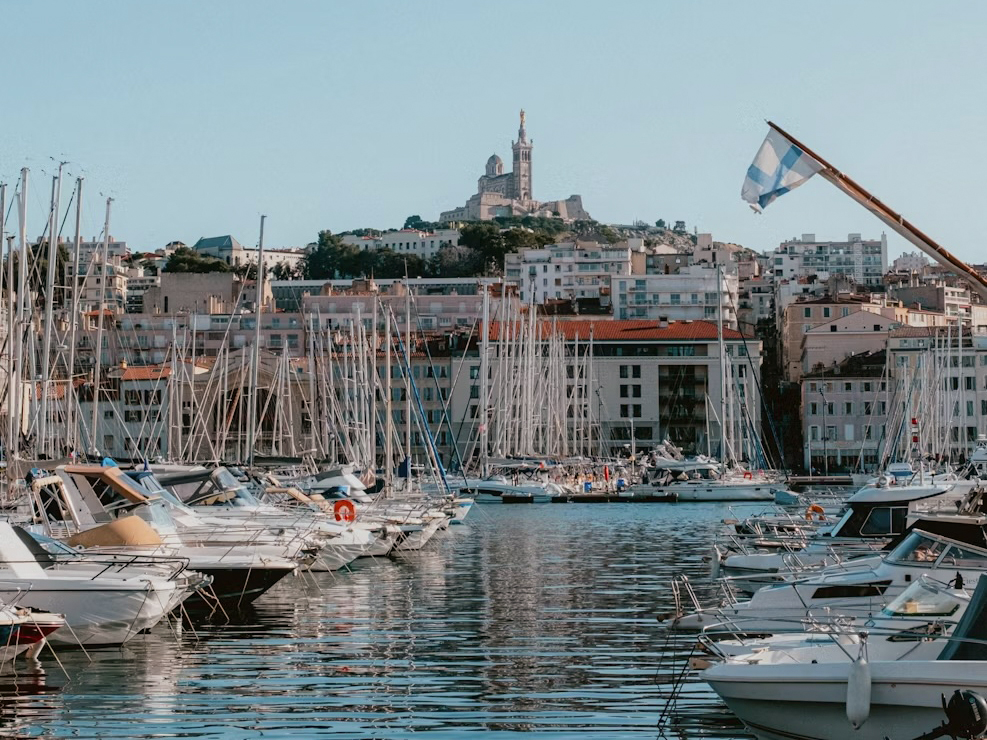
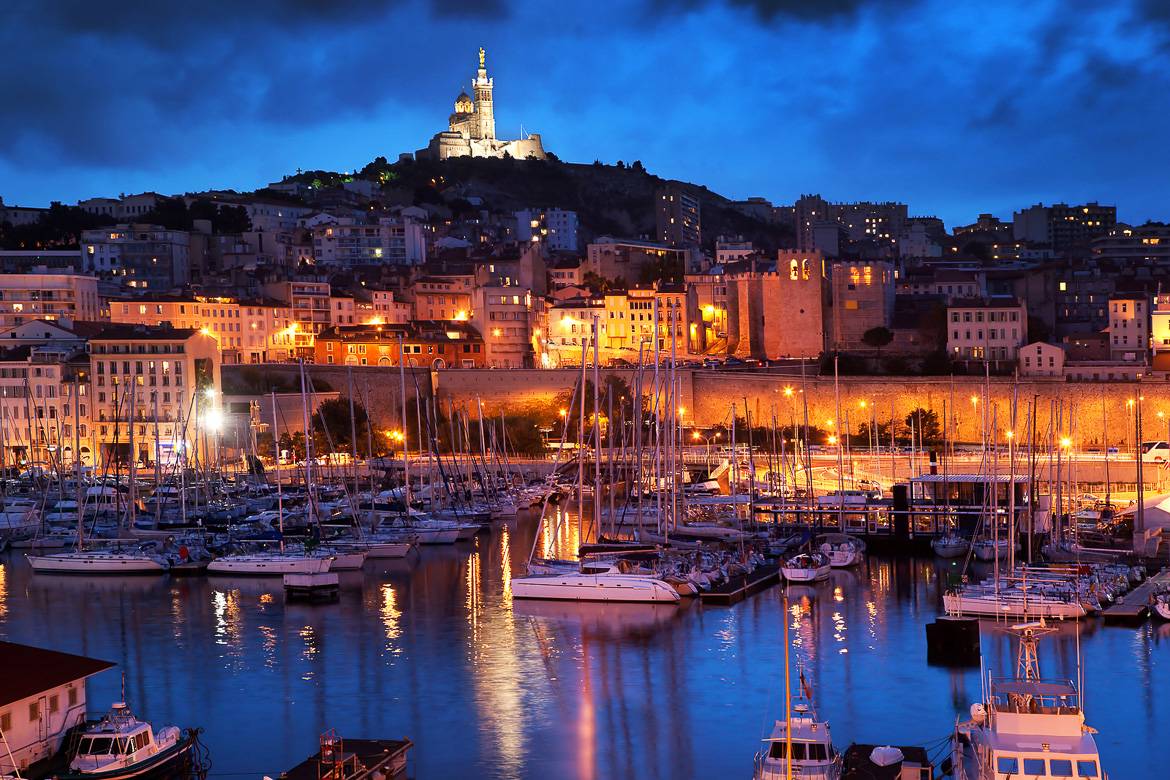
The Vieux-Port of Marseille with Notre-Dame de la Garde in the background [Joachim Lesne/ Unsplash]
As the 2nd largest city in France, Marseille has more than a few attractions to offer! The special city has an exhilarating combination of the old and the new. Marseille was founded over 2,600 years ago, which makes it the oldest city in France. The city’s rich history is reflected in its diverse architecture, from the ancient Abbey of Saint-Victor to landmarks like the Hôtel de Ville and the iconic Notre-Dame de la Garde. At the same time, Marseille embraces a modern identity and is widely recognized as one of the birthplaces of French hip-hop and rap, with a vibrant music and arts scene that continues to shape its culture today. The Mediterranean city boasts many cultural influences, and has become quite the melting pot. Marseille offers countless things to see and do, but where should you begin?
To give you a little taste of what the city has to offer, we’ve assembled a guide to spending 48 hours in Marseille!
Day 1
10 am – Notre-Dame de la Garde
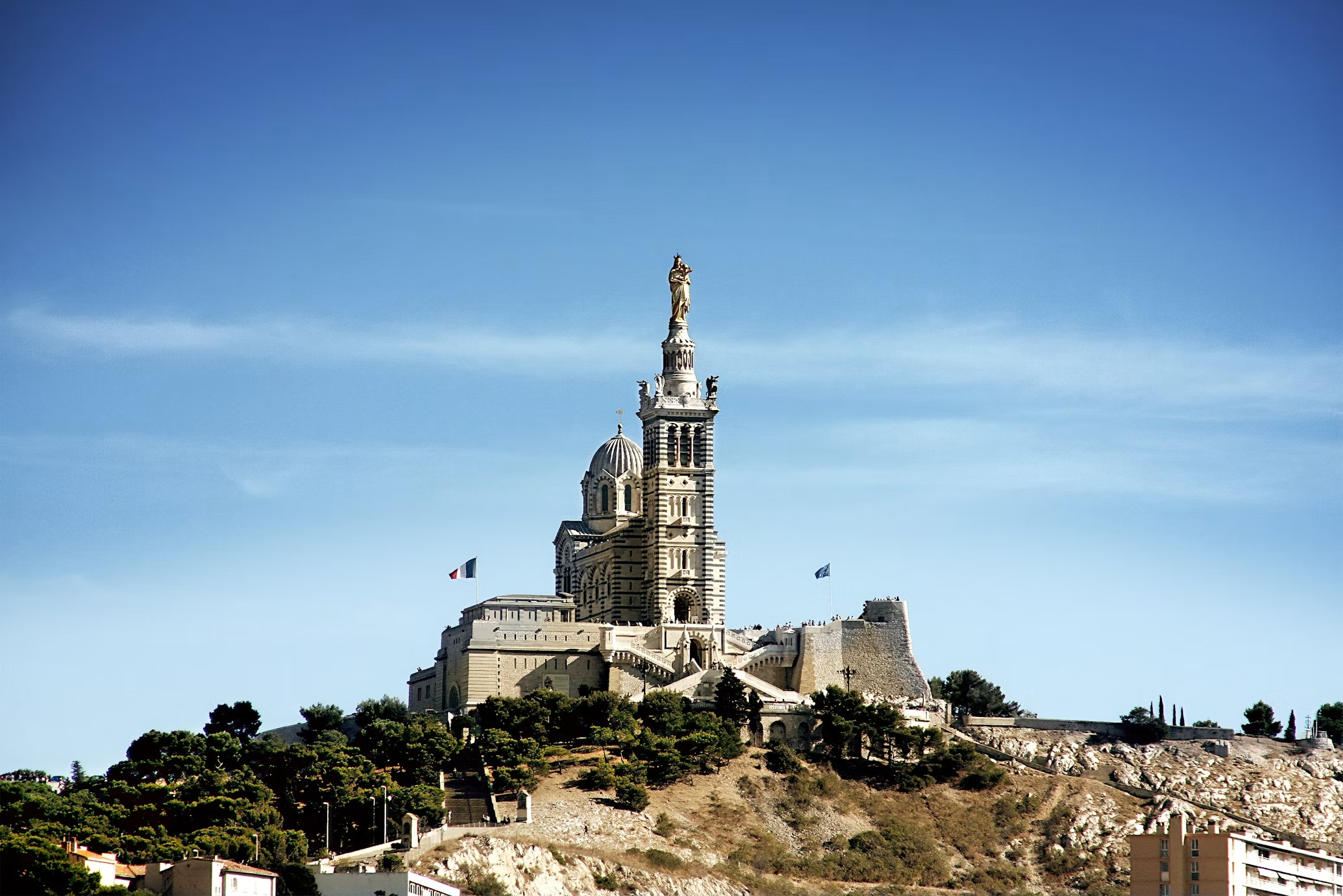
The magnificent Notre-Dame de la Garde in Marseille [ Margit Knobloch/ Unsplash]
2 pm – Vieux-Port and La Canebière
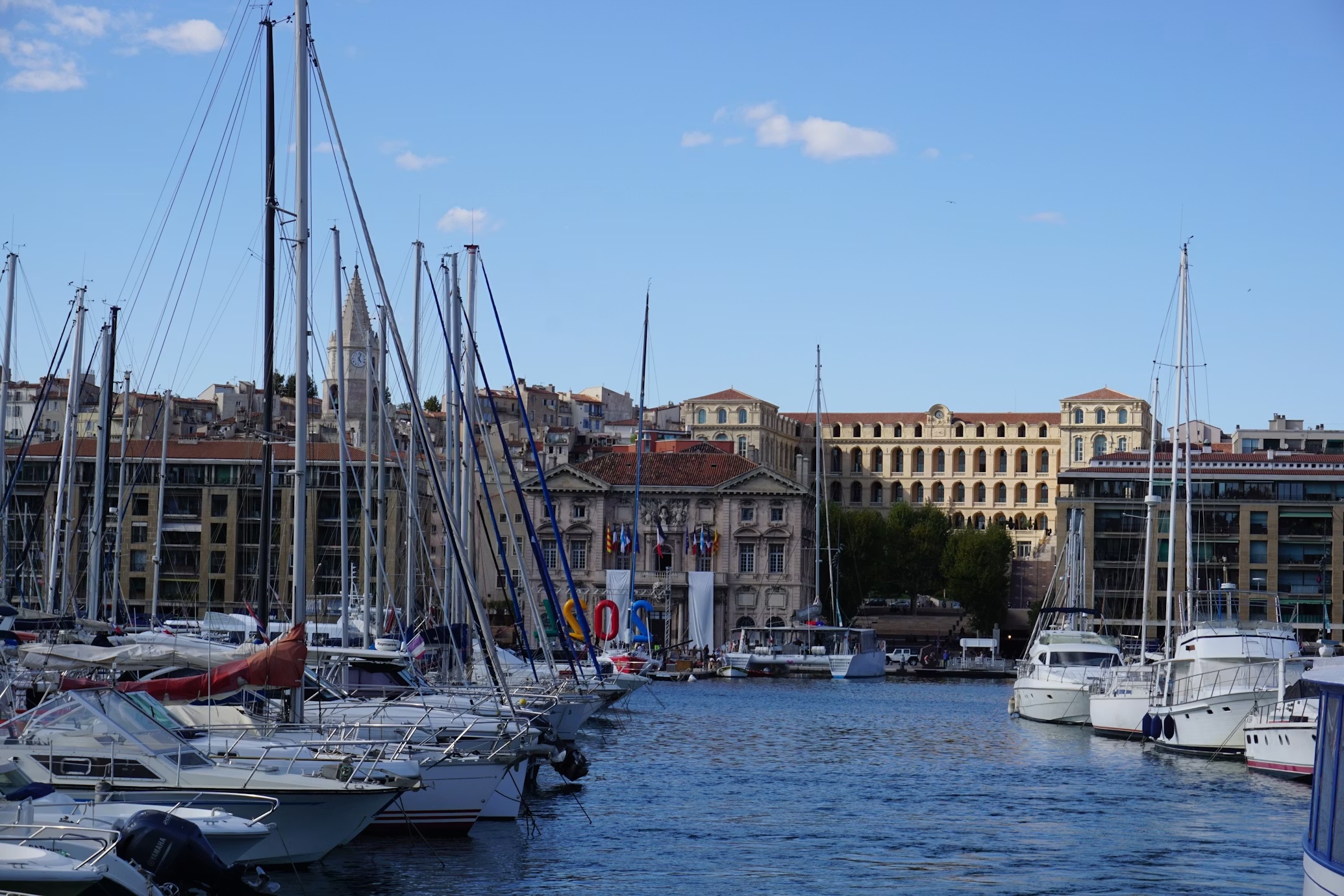
The Vieux-Port, Marseille’s harbors and the Mediterranean Sea [Sebastien Devocelle/ Unsplash]
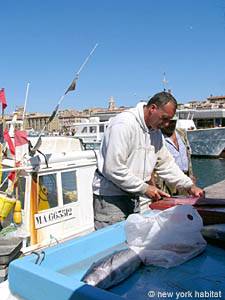
After lunch, you’ll get to explore the area around the harbor. North of Vieux-Port you will find the Hôtel de Ville, or City Hall, as well as the imposing Marseille Cathedral. The Cathedral’s official name is Cathédrale Sainte-Marie-Majeure de Marseille, but it’s often referred to by its shorter name: Cathédrale de la Major. The gigantic Cathedral was built in 1896, and is a national monument of France. After exploring the north side of the harbor, make your way east. At the east side of Vieux-Port, you’ll find the famous daily fish market at the Quai des Belges. Watch the locals haggle over the fish prices, and then stroll to the famous avenue La Canebière, where you will find numerous shops.
7 pm – La Plaine district
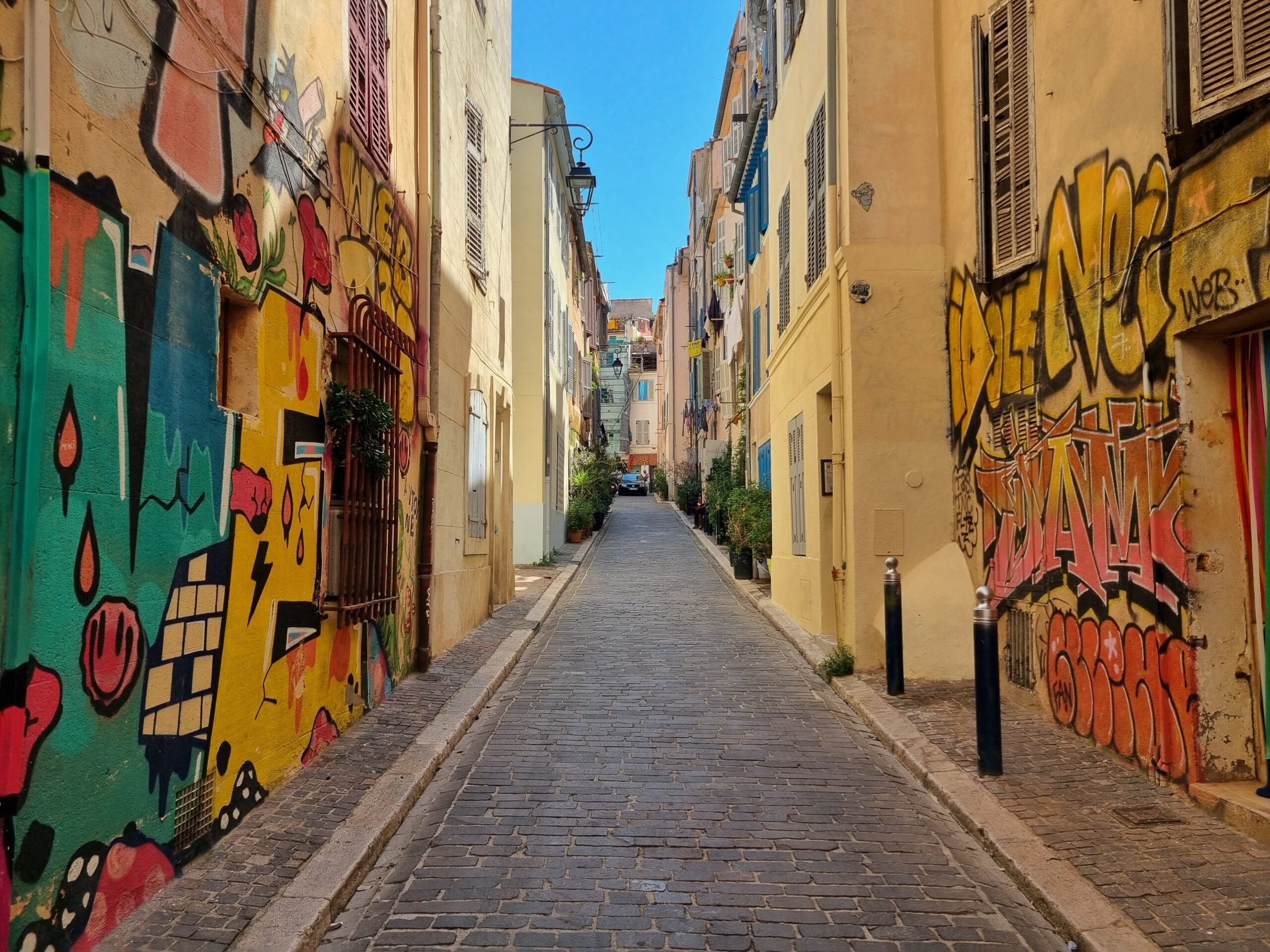
Street art in Marseille’s Cours Julien. [Photo credit: Alguieri/Pexels]
When you’re starting to get tired, it’s great to have your own place nearby where you can get some sleep after a long day of exploring the city. By renting a vacation rental apartment in Marseille, you get to stay among the locals and immerse yourself in the city life, while having access to all the same comforts you have in your own home. For example, most of our apartments come with a fully-equipped kitchen, where you can try your hand at creating real Provençal meals. Visit one of the local produce markets, or get fresh fish at the Vieux-Port market, to get all the ingredients you need. Need some inspiration? Check out this article about famous southern French cuisine.
Day 2
9 am – Les Calanques de Cassis
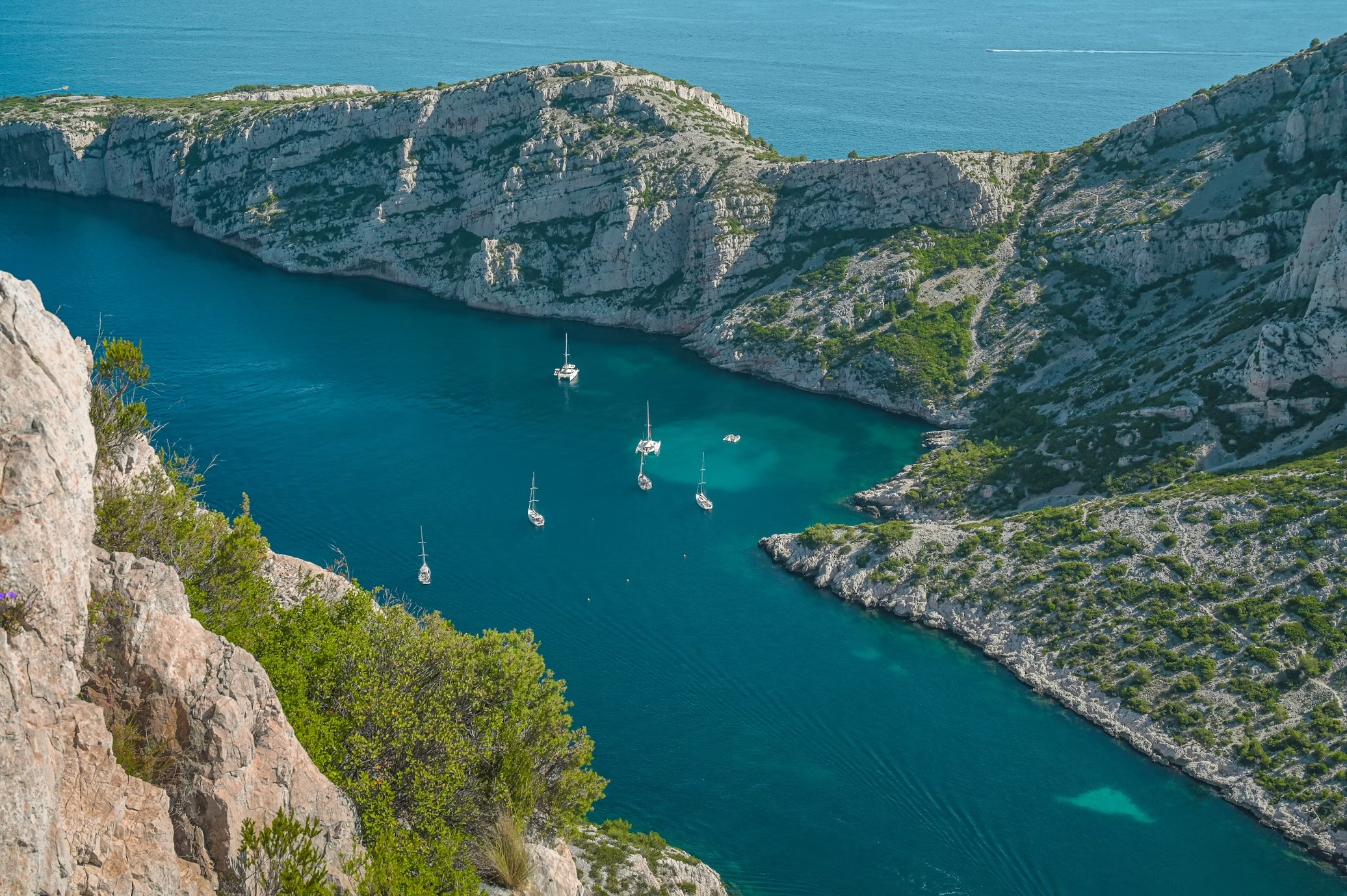
A calanque near Marseille and the Mediterranean Sea [QQ Z/ Unsplash]
The Calanques National Park stretches between Marseille and the charming seaside town of Cassis, located about 20 kilometers (12 miles) to the east. While the calanques can be explored from both towns, those closest to Cassis are among the most spectacular. Boat tours departing from Cassis offer an unforgettable way to discover these dramatic limestone coves, and many include opportunities to swim in their crystal-clear turquoise waters, so don’t forget your swimsuit. If you prefer to stay on land, experienced hikers can follow the scenic trails above the calanques for breathtaking panoramic views of the Mediterranean coastline. Whichever way you choose, be sure to get back to Cassis at lunchtime to enjoy a real Provençal meal. To get to Cassis from Marseille, you can take a train from St Charles station in Marseille to the Cassis train station, or you can take a bus.
Another great way to spend an afternoon out of Marseille’s city center is to explore the nearby Château d’If. This fortress lies on a small island in the Bay of Marseille. The fortress used to be a prison, and was made famous when Alexandre Dumas used it as a setting for the novel The Count of Monte Cristo. Nowadays, Château d’If is a popular tourist destination. Boats to Château d’If leave all day long from the Vieux-Port.
4 pm – Le Quartier du Panier
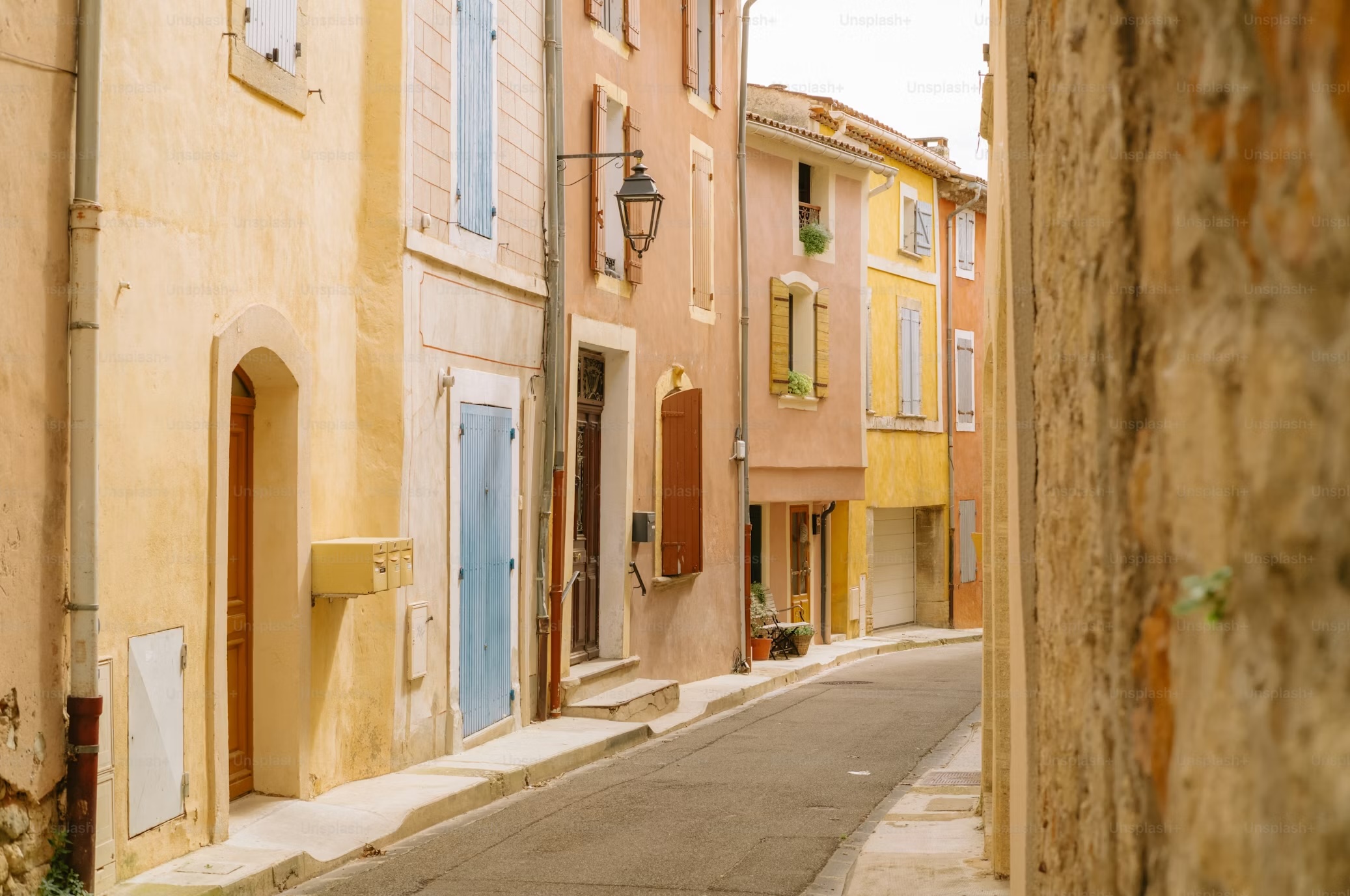
A cobbled street in Le Quartier du Panier, Marseille
Back in Marseille, pay a visit to the scenic Le Panier neighborhood, north of Vieux-Port. The hillside district has many pedestrianized cobbled streets, which take you along beautifully colored buildings.
Apart from being a historic district of Marseille, Le Panier also inspired the famous French TV show Plus Belle la Vie. Take a stroll around the neighborhood and soak in the distinctive atmosphere. The 1st District used to be the home to sailors and fishermen, but nowadays the neighborhood is one trendy multicultural blend. There are many cute shops and cafes all around the alleys.
6 pm – Bouillabaisse in Marseille
Perhaps the most famous dish of the region originated in Marseille. Bouillabaisse is a seafood soup or stew that is prepared according to a very strict recipe. If you want to try a truly traditional bouillabaisse, there are several restaurants in Marseille that you can go to. Le Rhul, Chez Fonfon and Le Miramar, for example, all prepare bouillabaisse in their own traditional ways. There’s no better end to the day than sitting in a nice restaurant, eating great food and watching the sun go down over the Mediterranean Sea.
We hope you’ve enjoyed this quick tour of Marseille! Of course, there are many more sites to see and things to do in this Mediterranean city. What’s your favorite thing to do in Marseille?
.

Leave a Reply